22–24 August · Launched
Onboarding and team formation
Thirty builders joined five groups of six, met their mentors, appointed Team Leads, and set up the shared Slack, Drive, Meet, and GitHub spaces used throughout the programme.
TAG Ecosystem is a community-driven learning ecosystem where Africans gain real AI skills, build projects together, and grow into industry-ready professionals.

TAG Ecosystem is more than a platform. We are a structured community where members learn together, build together, practice together, and grow together. We combine AI education, hands-on projects, community learning, peer mentorship, accountability systems, and career guidance to help you move from confusion to confidence in AI.
To build Africa's leading AI learning ecosystem where anyone, regardless of background, can gain the skills, confidence, community, and opportunities needed to thrive in the future of technology.
TAG Ecosystem is a free, community-driven learning ecosystem that moves Africans from confusion to competence in AI. We combine simplified AI education, structured curriculum, hands-on projects, peer mentorship, weekly accountability, and career guidance, while producing original research on low-resource African languages building the pipeline for Africa's next generation of AI professionals and researchers.
We combine education, community, projects, and career guidance into one structured ecosystem.
Clear, beginner-friendly AI education that removes confusion and builds genuine understanding. Practical lessons designed for real-world application.
Learn alongside peers, participate in group projects, attend weekly meetings, and build accountability together. You're never learning alone.
Gain guidance from experienced professionals, discover job opportunities, prepare for interviews, and transition into AI careers with confidence.
Skip theory and get practical. Build real ML projects, contribute to open source, complete hackathons, and create a portfolio that demonstrates your skills.
Our structured pathways are designed for real career transition and technical mastery.
Practical projects making real impact in Africa's tech ecosystem.
Building one of the largest Pidgin educational datasets to support NLP research and machine learning models for African languages.
Developing machine translation systems to convert English content into Pidgin, making technology more accessible across Africa.
Launched on 24 August 2026, the TAG AI Engineering Bootcamp moves builders beyond tutorials and isolated notebooks. Thirty builders work in five mentored teams to diagnose real industry problems, engineer complete AI products, review one another's work, deploy what they build, and defend their decisions on Demo Day.
A short introduction to the programme, the builders, and the engineering journey from onboarding to shipped products.
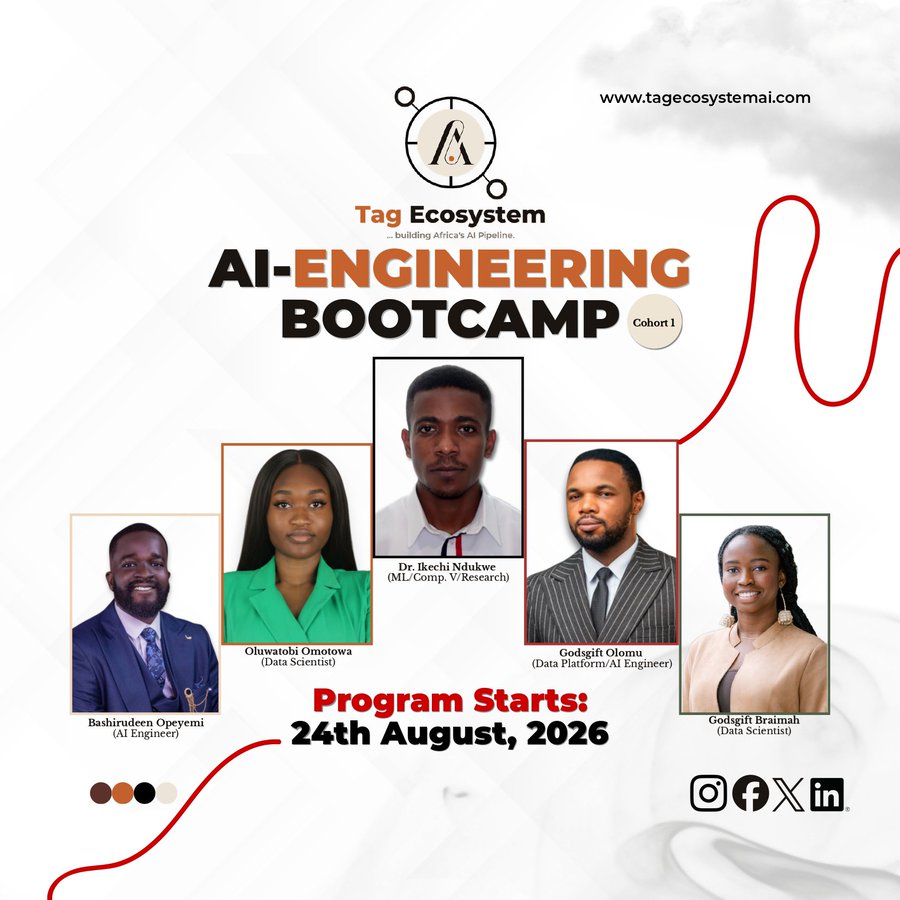
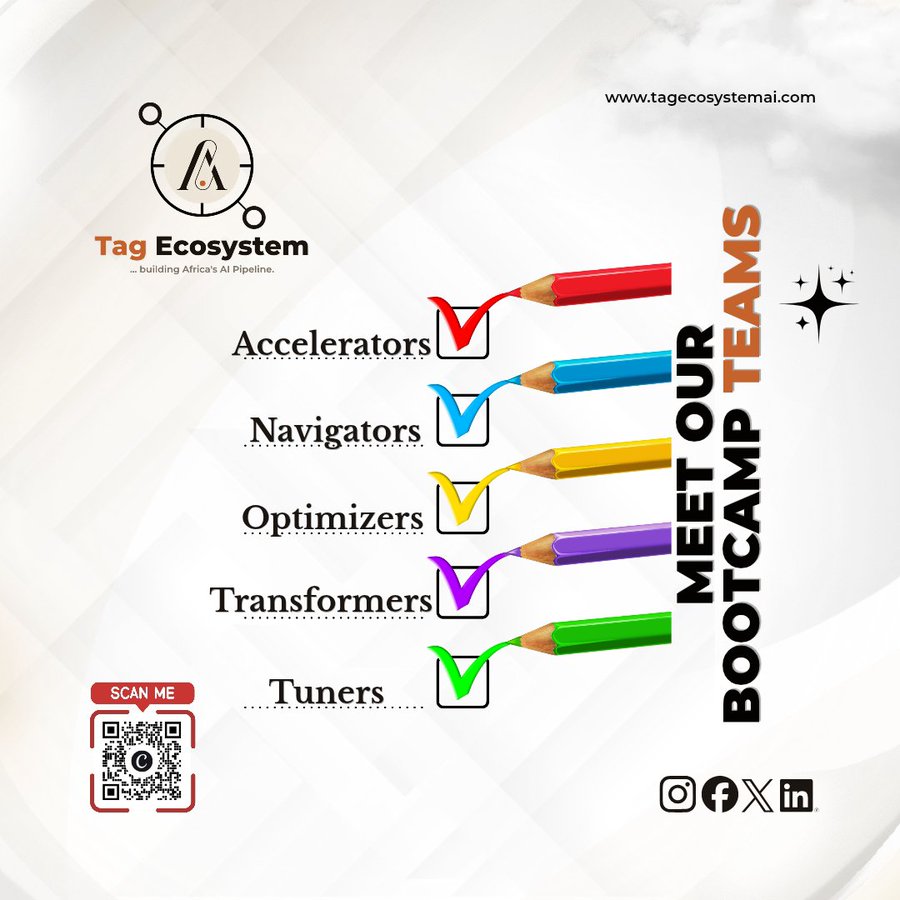
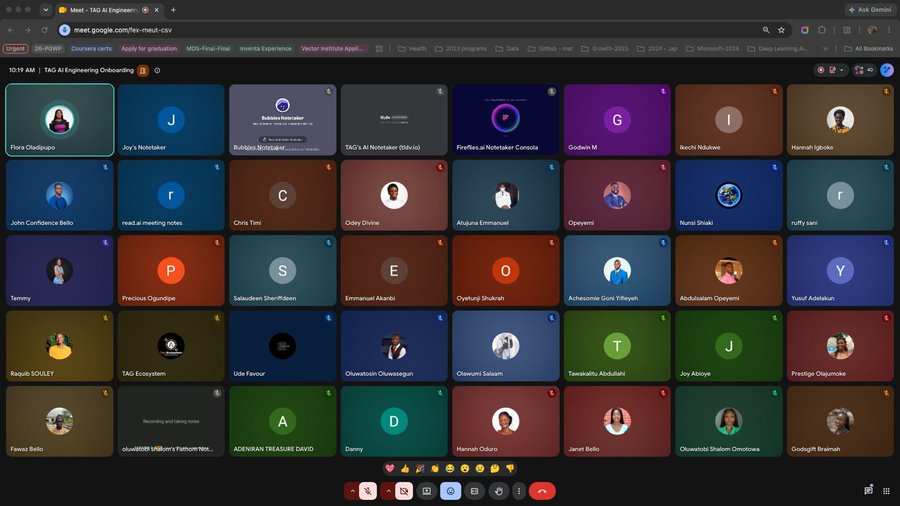
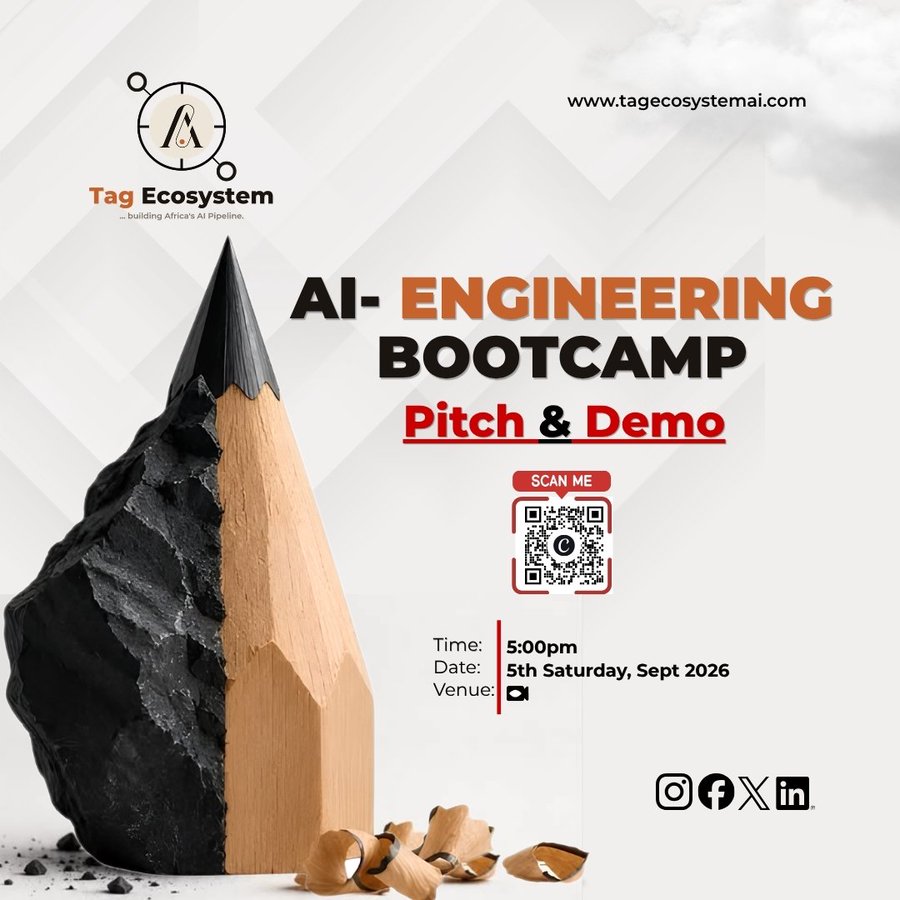
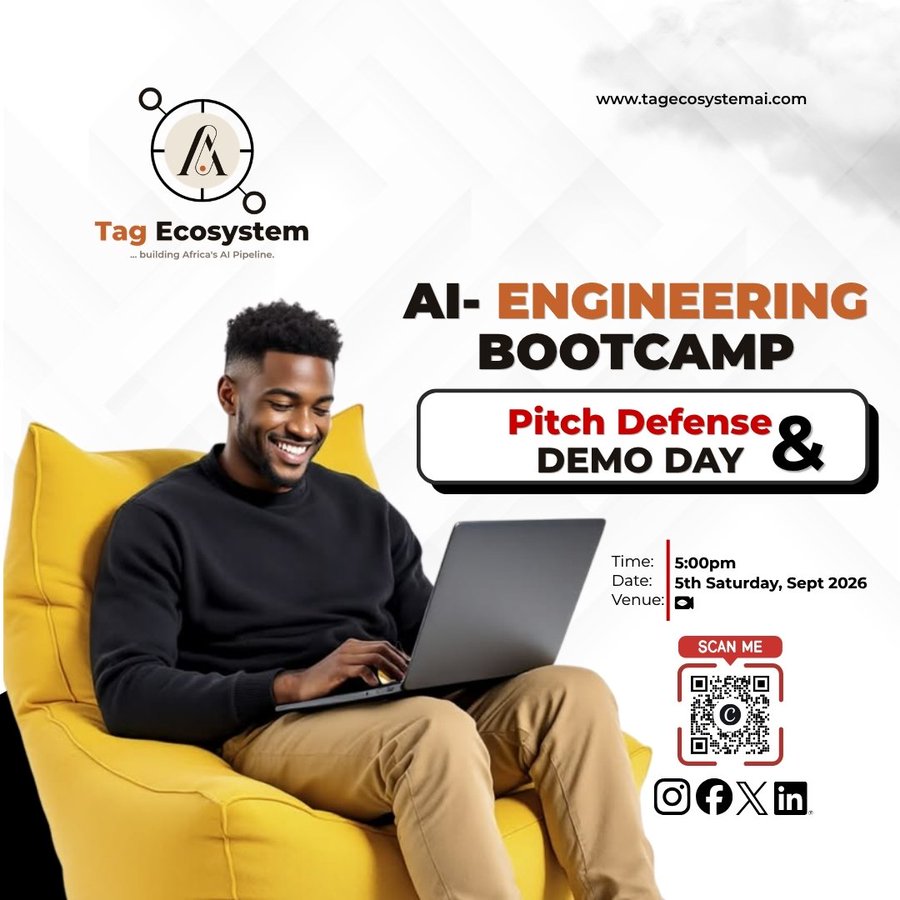
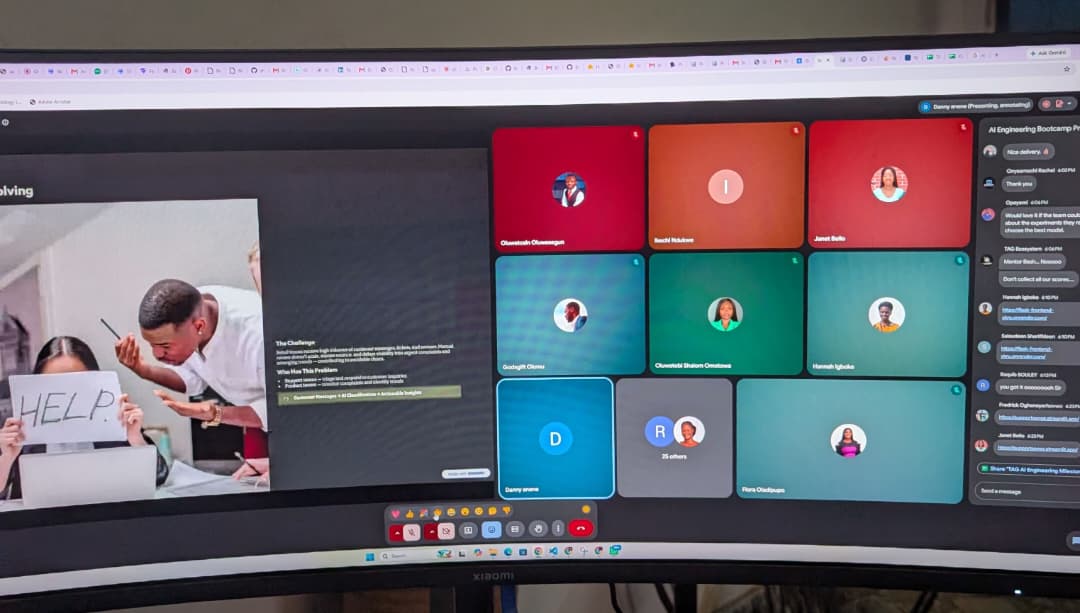
Meet the builders, mentors, and teams moving through Cohort 1 together.
Cohort 1 started locally, where teams learned to ship without depending on paid model APIs. Each project raises the technical and professional bar.
Thirty builders joined five groups of six, met their mentors, appointed Team Leads, and set up the shared Slack, Drive, Meet, and GitHub spaces used throughout the programme.
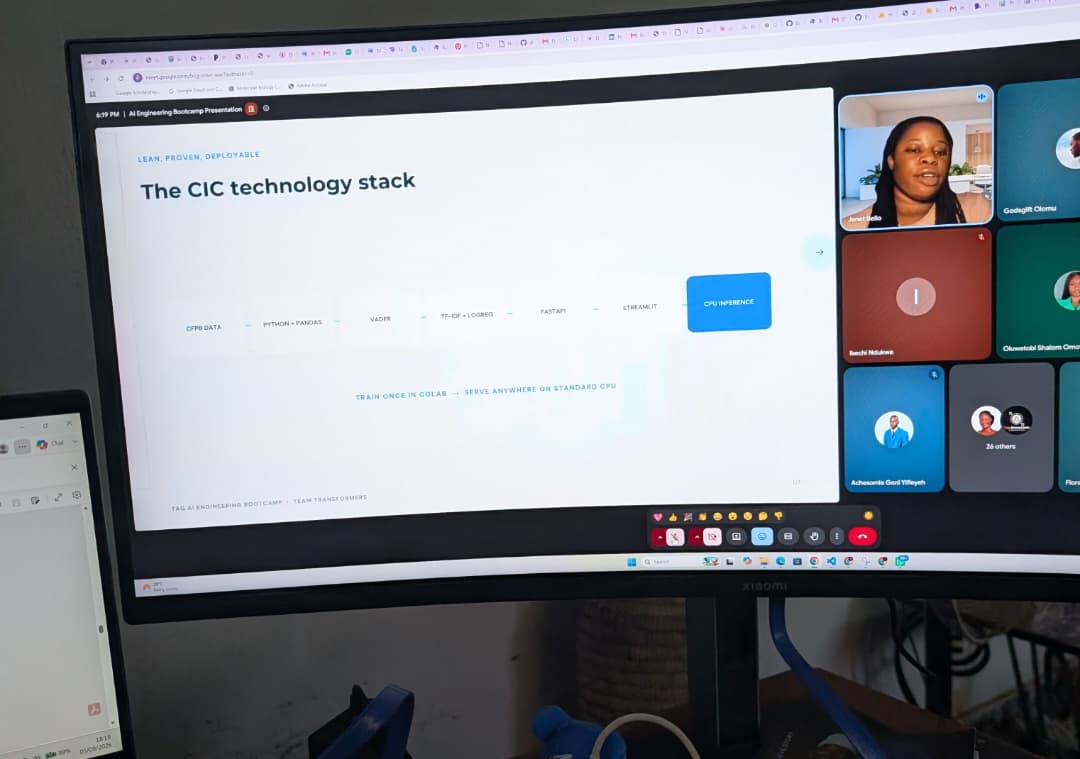
Teams completed two rapid project cycles using real data and local tooling, with a working frontend, backend, AI core, deployment, README, presentation, and scored Demo Day. Their second presentations showed how mentor feedback had been carried back into the products.
As of 8 October, teams are completing their largest group project: a cloud product in banking, legal intelligence, or logistics, ready for the 10 October Demo Day.
Each builder will pitch and ship a solo capstone, launch a four-project portfolio, defend the work before a panel, and complete technical, project, and behavioural mock interviews.
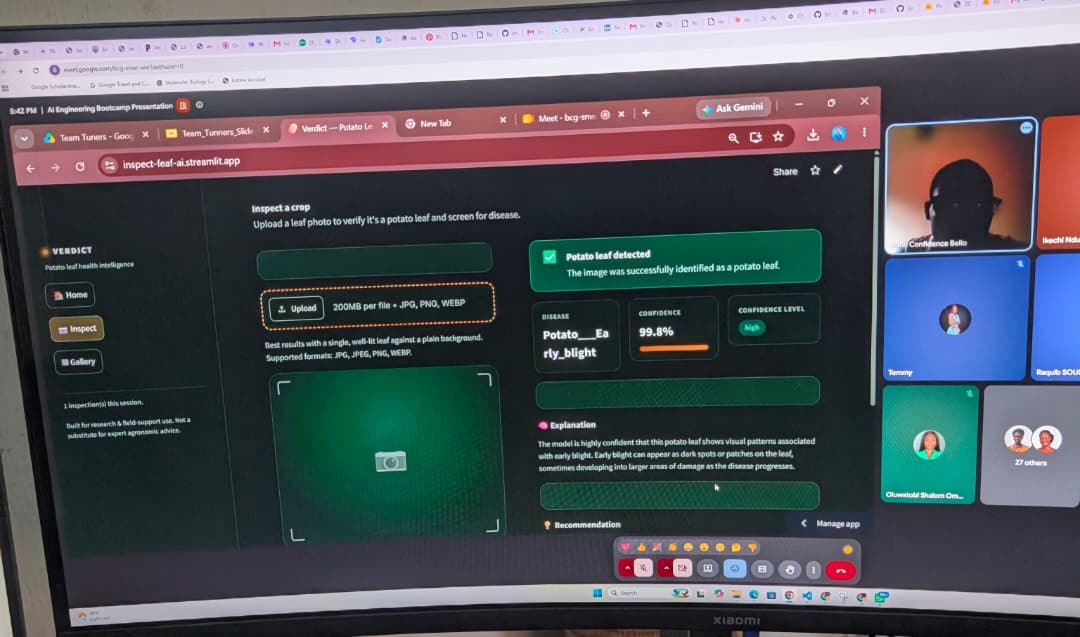
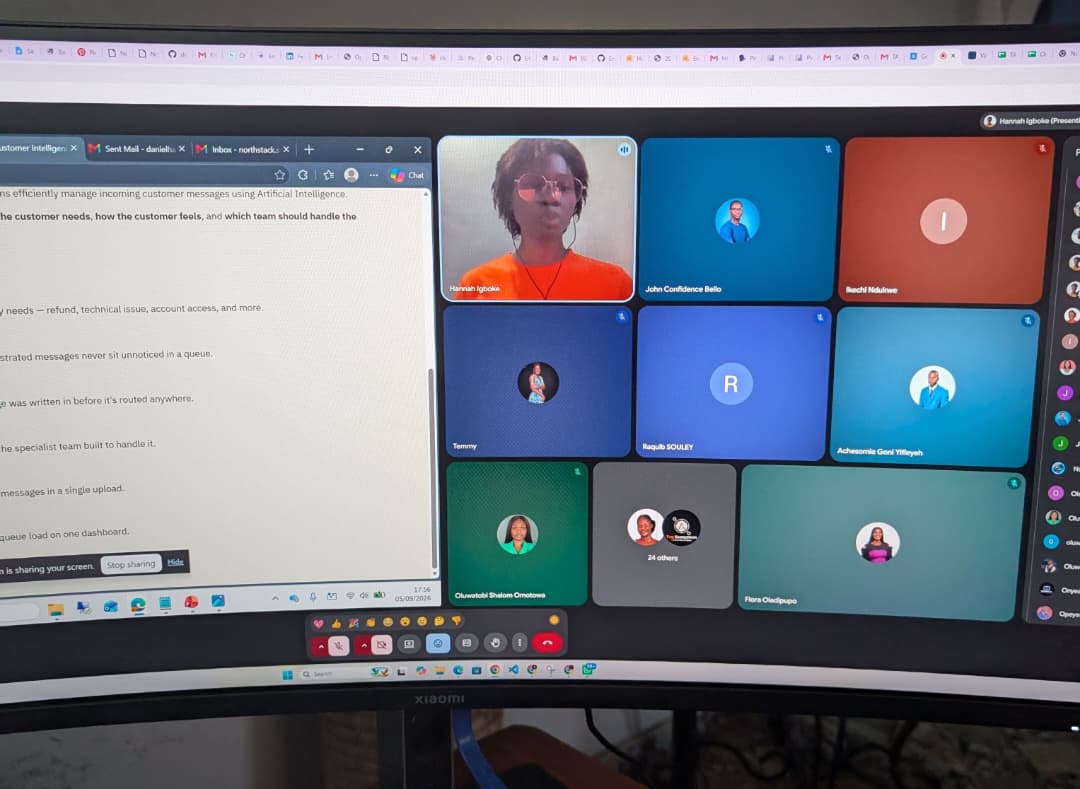
Participant build-in-public posts show how the briefs become distinct, usable products. These are a few of the solutions teams have shipped and presented so far.
Systems that classify customer messages by intent and sentiment, route support tickets, process bulk feedback, and surface trends through operational dashboards.
Local RAG applications that ingest sensitive documents and return grounded answers with source citations while keeping files and language models on the user's machine.
A multi-stage computer-vision product that validates an uploaded potato-leaf image before classifying it as healthy, early blight, or late blight and returning an explanation.
Offline tools that organise course materials and research papers, generate summaries and study aids, and answer questions with evidence traced back to the uploaded sources.
RawSignal helps readers and writers examine news language through neutral summaries, loaded-language detection, highlighted passages, writing recommendations, and cross-outlet story comparison.
AI-assisted products that compare a resume with a job description, make the match understandable, and help candidates identify the experience and skills they need to strengthen.
Slack is the programme's operational home. Teams turn an industry brief into a PRD and architecture, track work on GitHub, give every builder an owned task, and ship through the same reviewed workflow used by engineering teams.
Each mentor acts as a technical lead: guiding architecture, reviewing code and pull requests, unblocking the team, and coaching the demo without taking over the build.
Our research on African-language machine translation is earning international recognition, most recently a Top Poster Prize at Deep Learning Indaba 2026, on top of two Eng-PidginEdu poster acceptances at major AI conferences.
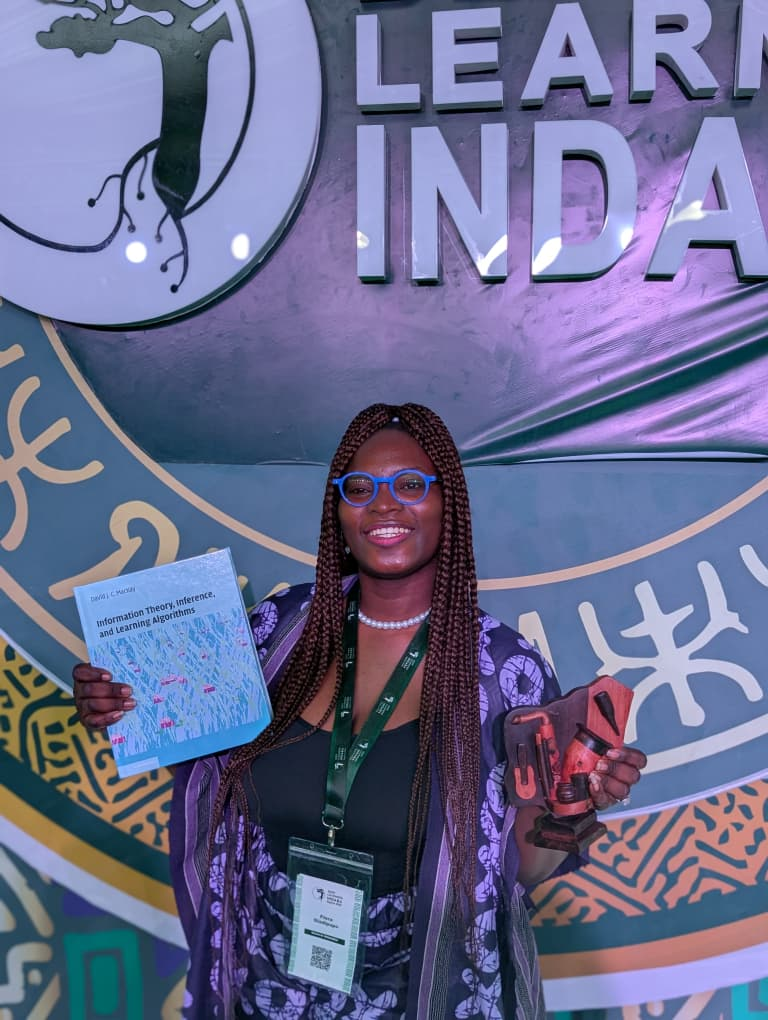

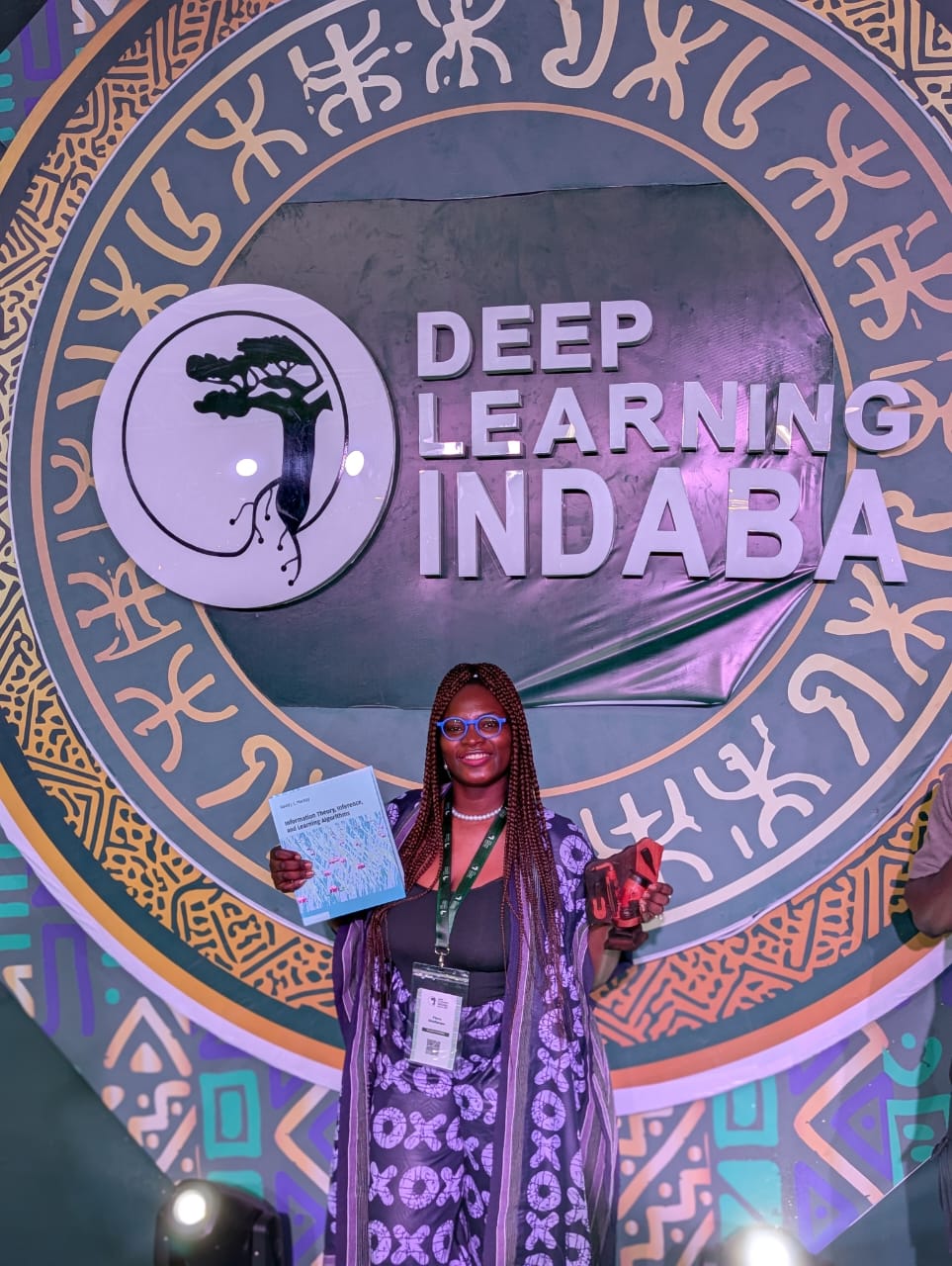
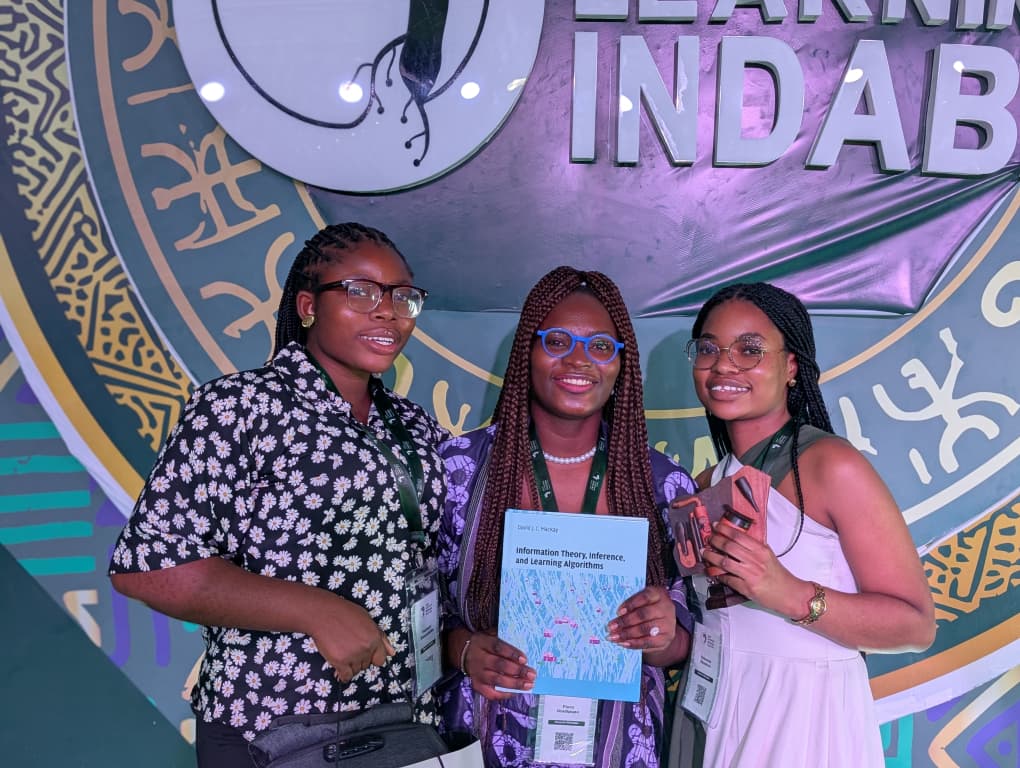
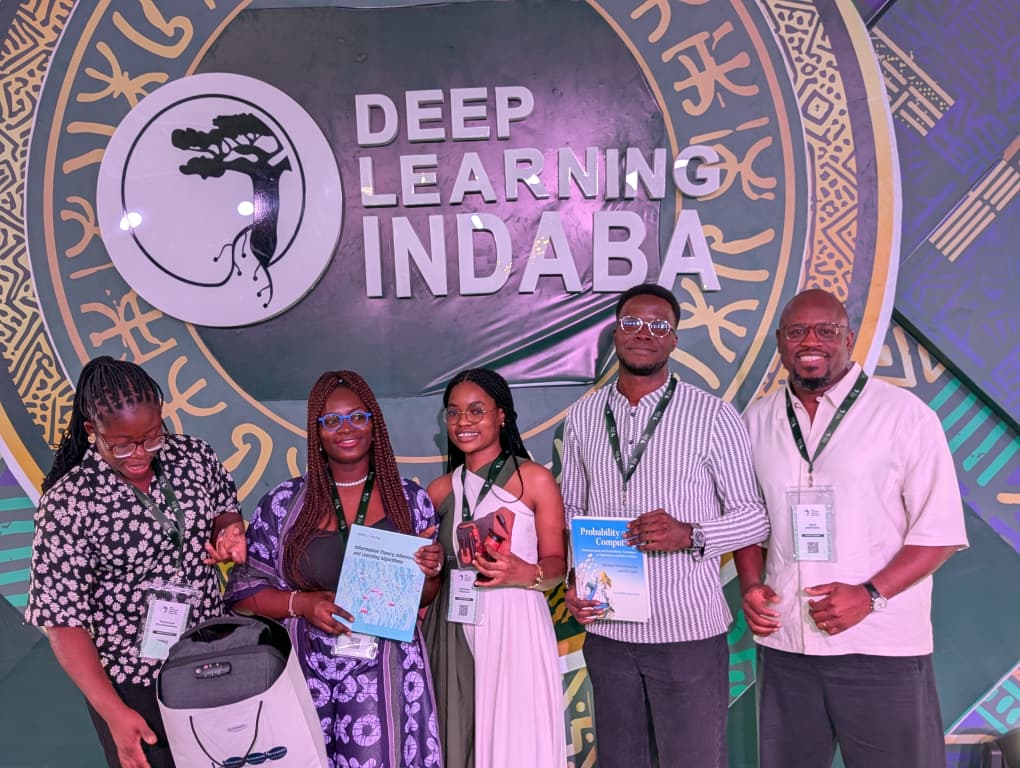
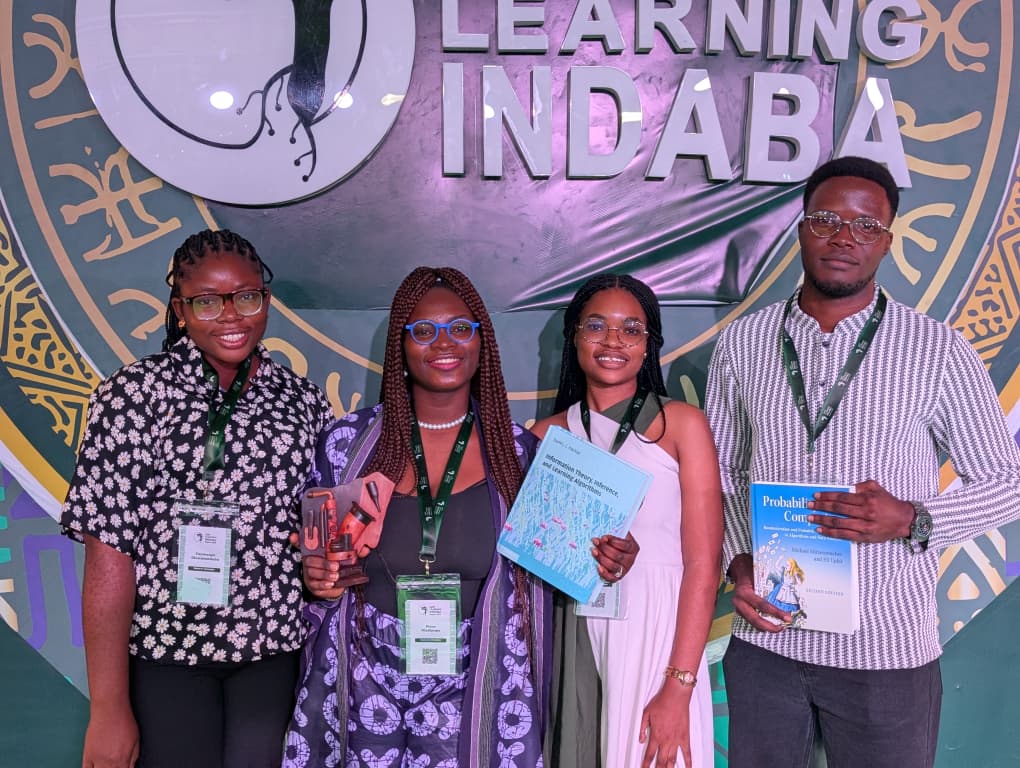
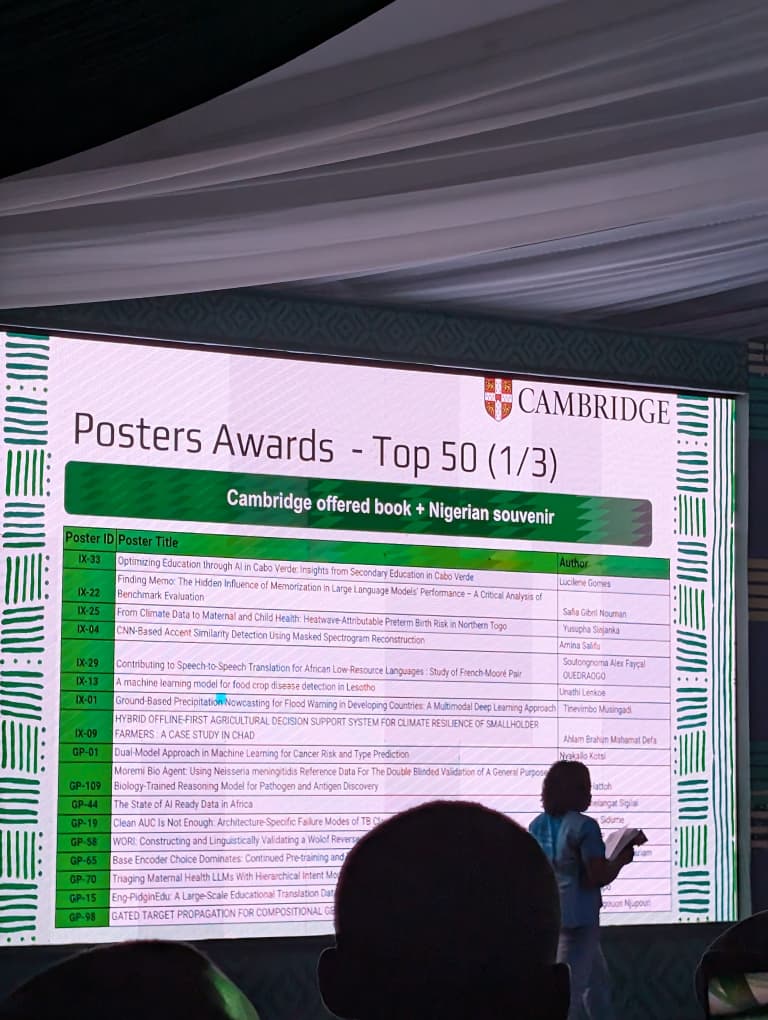
Our poster, "Eng-PidginEdu: A Large-Scale Educational Translation Dataset for Nigerian Pidgin through Glossary-Augmentation" was selected among the Top 50 Posters at Deep Learning Indaba 2026, the biggest AI research conference in Africa, earning a Cambridge University Press book and a handcrafted Nigerian wooden trophy. The recognition celebrates our glossary-augmented approach to machine translation for Nigerian Pidgin, closing the terminology gap that keeps general-purpose translation systems from working for educational and scientific content in Pidgin.
It's Flora's second time standing in this moment: her first Top Poster recognition came in 2024 in Dakar, Senegal, for translating English biological research papers into Pidgin-English. Eng-PidginEdu was six months of building, testing, and rebuilding with a team that refused to give up, and this win belongs to all of them, not just the name on the poster. Congratulations to everyone whose data validation, glossary curation, and research support made it possible:
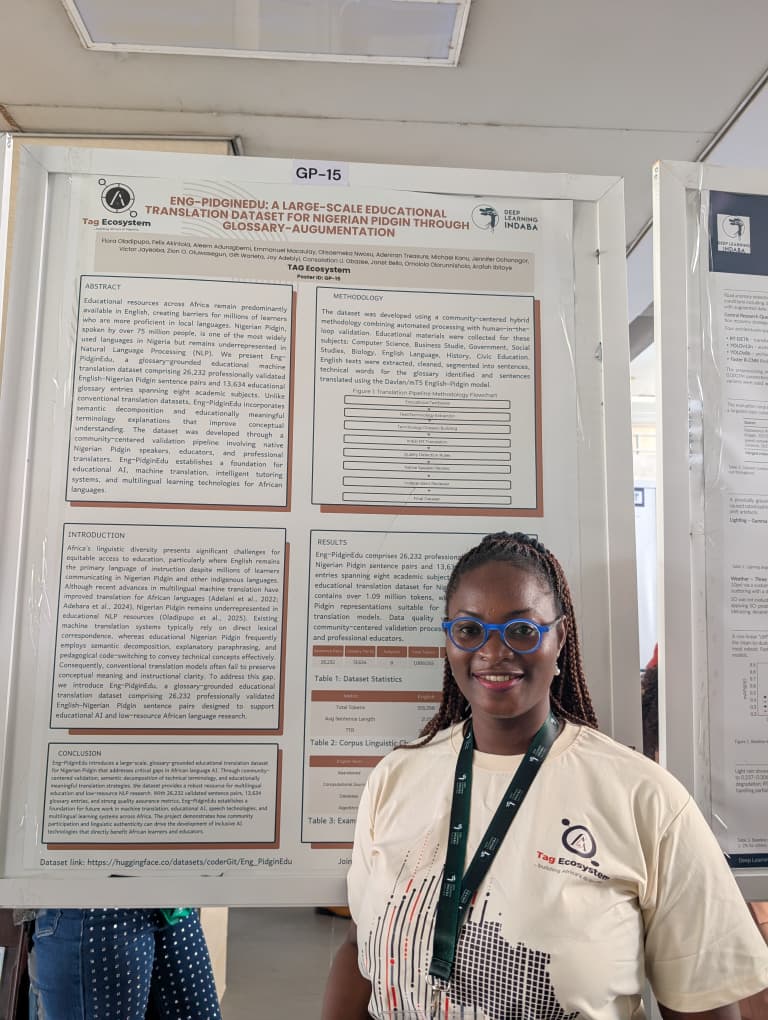
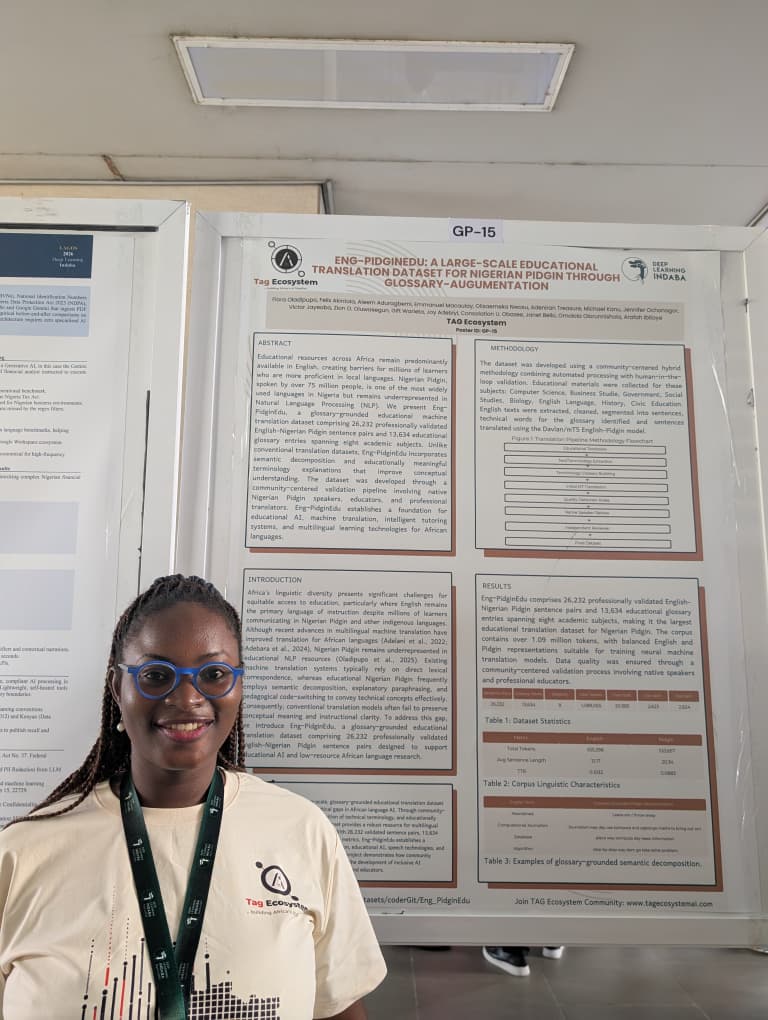
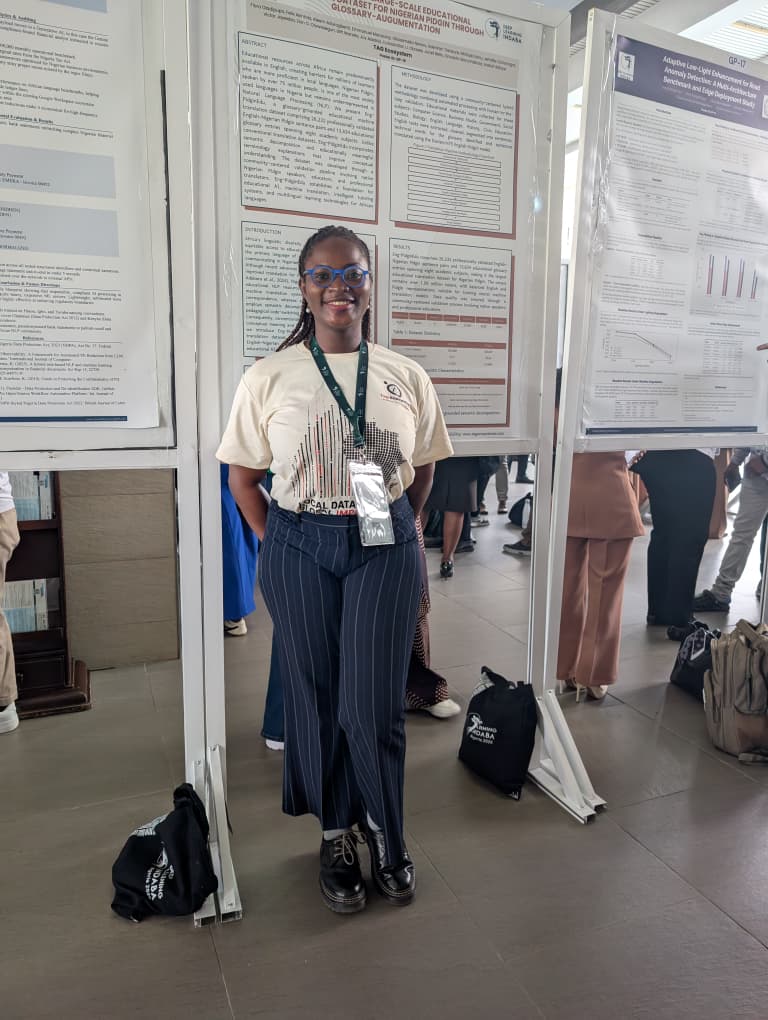
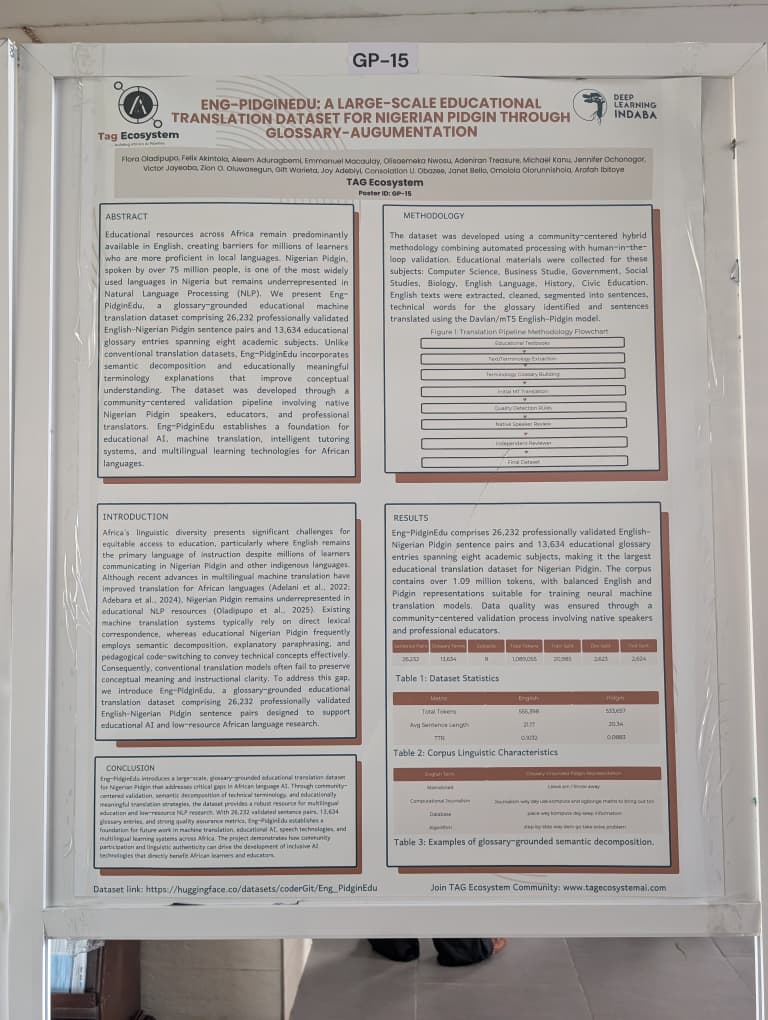
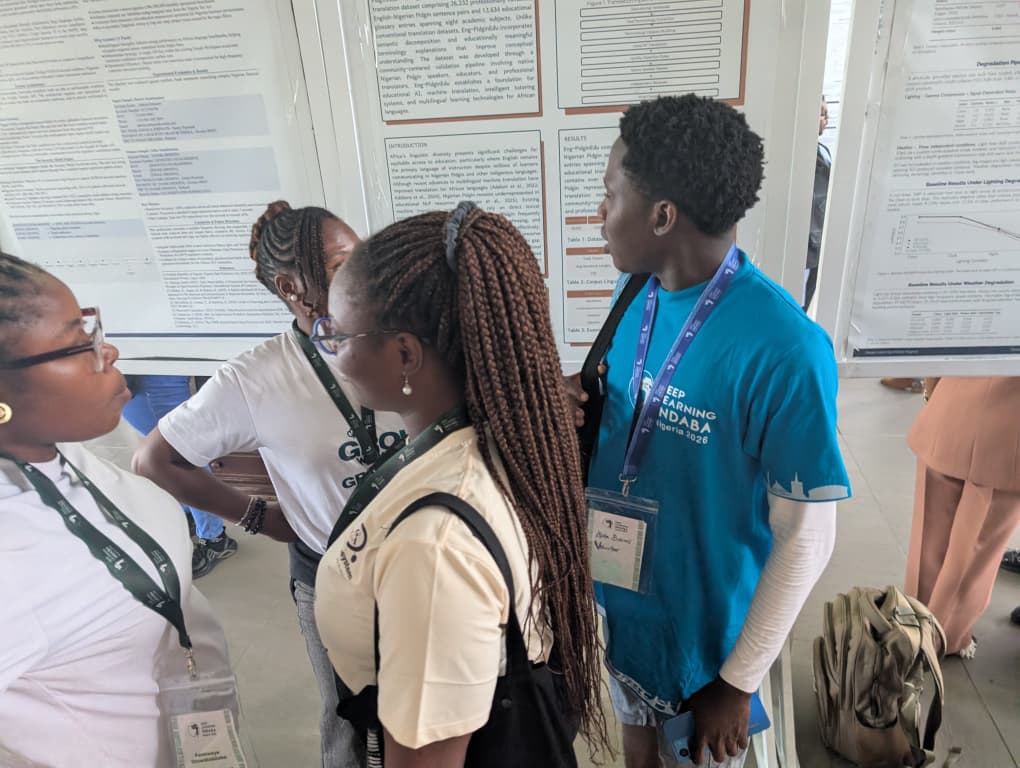
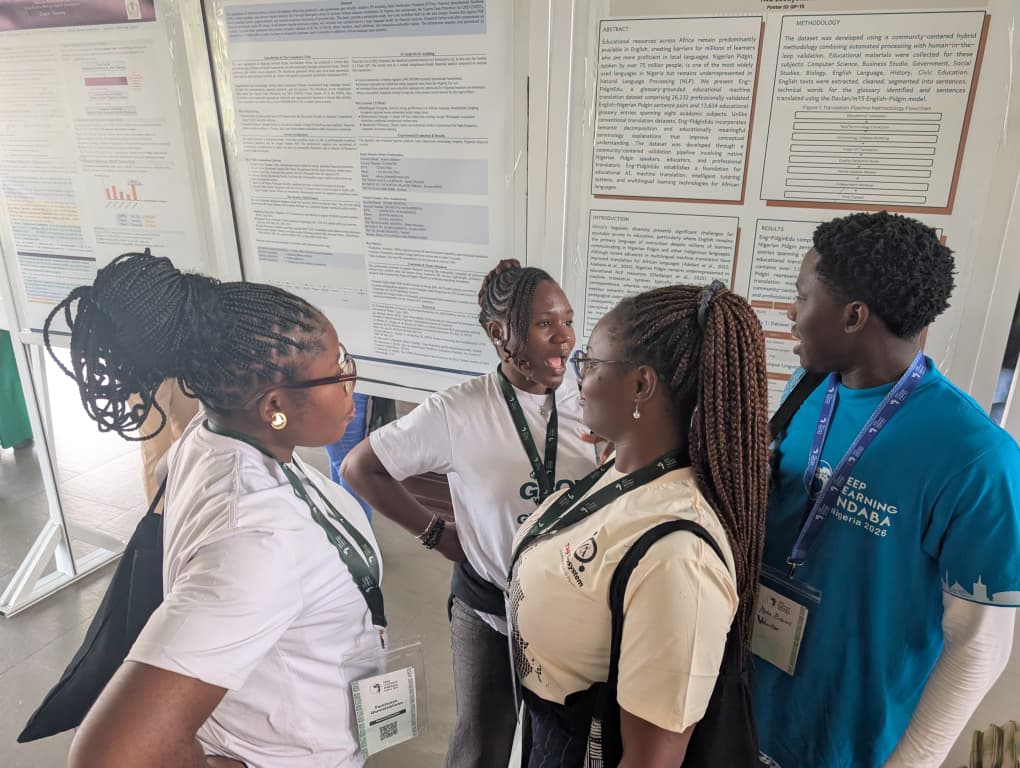
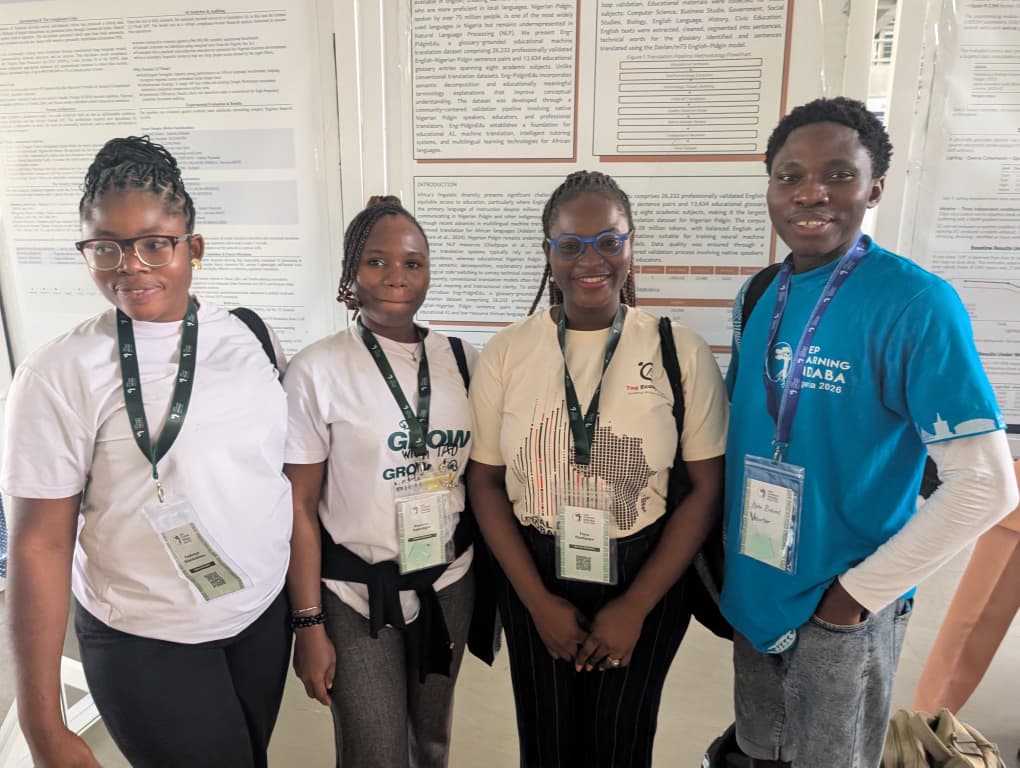
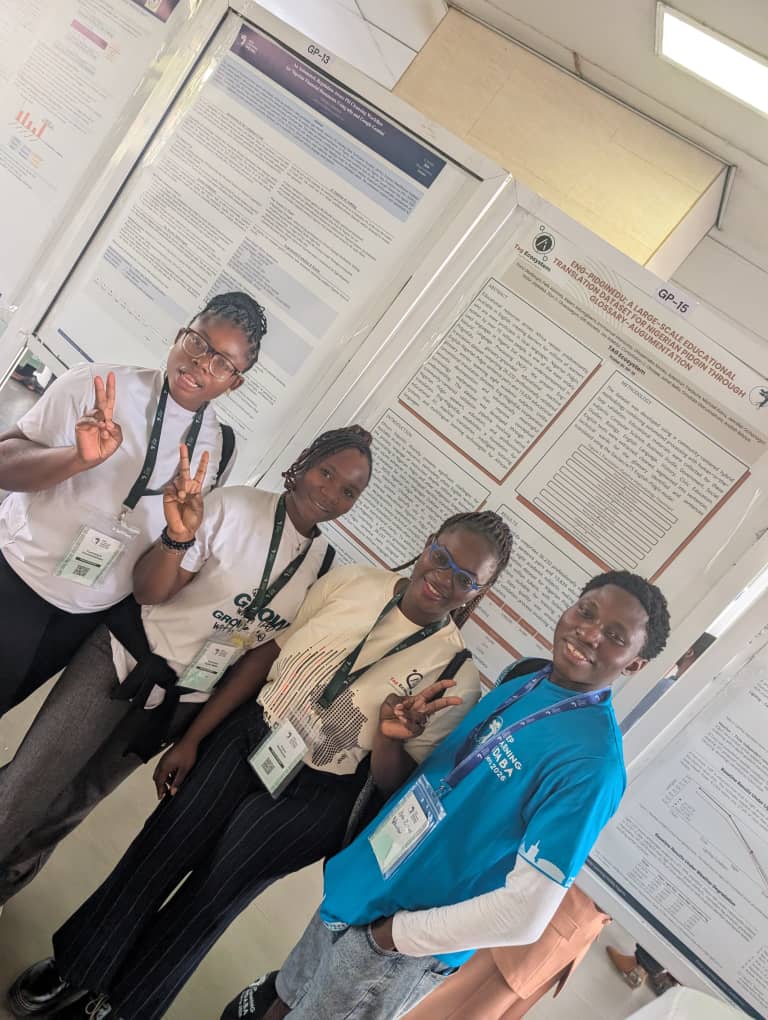
This is the same poster, "Eng-PidginEdu: A Large-Scale Educational Translation Dataset for Nigerian Pidgin through Glossary-Augmentation," that went on to win a Top 50 Poster Award by the end of the conference. But most of the work happened during the poster session itself: hours spent standing in front of Eng-PidginEdu, explaining glossary-augmented machine translation to whoever stopped to look.
Plenty of people walked up simply out of curiosity about what our community was building. Some had never thought of Nigerian Pidgin as a language with its own NLP challenges before, and were intrigued once they saw the scale of the work: 26,232 sentence pairs, 6,919 glossary terms, spanning eight academic subjects. Every conversation was a chance to make the case for African languages in AI research, one person at a time.
We also walked away with real feedback on how to improve the project, especially as we move into training our own translation model. That input is already shaping the next phase of the work.

Our work on Eng-PidginEdu, a glossary-grounded machine translation dataset for Nigerian Pidgin, was accepted as a poster at the Women in Machine Learning (WiML) Symposium, held alongside ICML 2026 in Seoul, South Korea.

The same Eng-PidginEdu research was also accepted as a poster at Deep Learning Indaba 2026, Africa's leading machine learning gathering, showcasing our community-driven approach to closing terminology gaps in low-resource African languages.
Our research gets the recognition, but the community is what makes TAG Ecosystem run. At Deep Learning Indaba Nigeria 2026, we finally met a lot of that community in person.
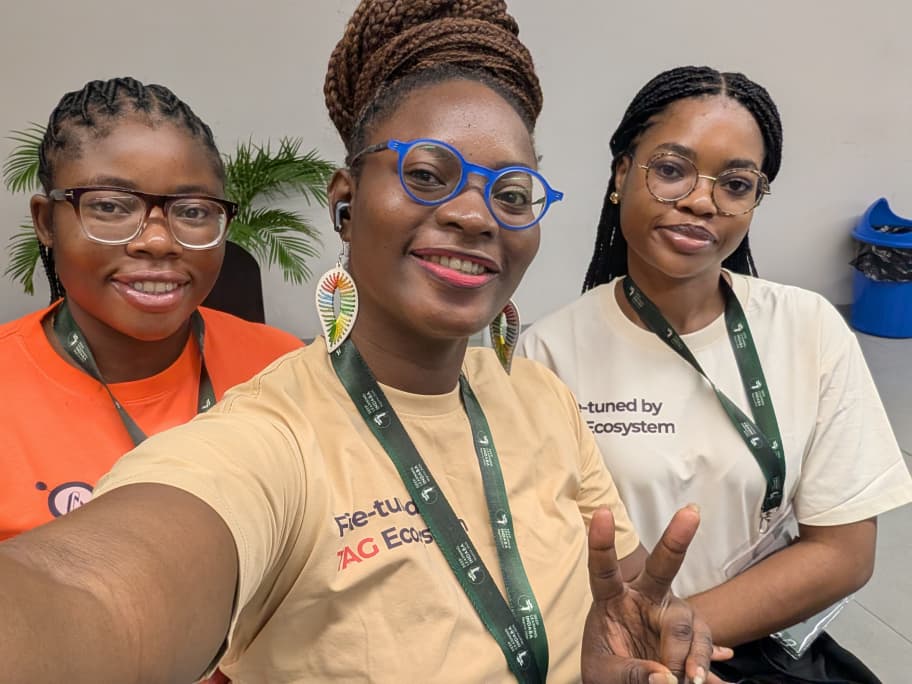
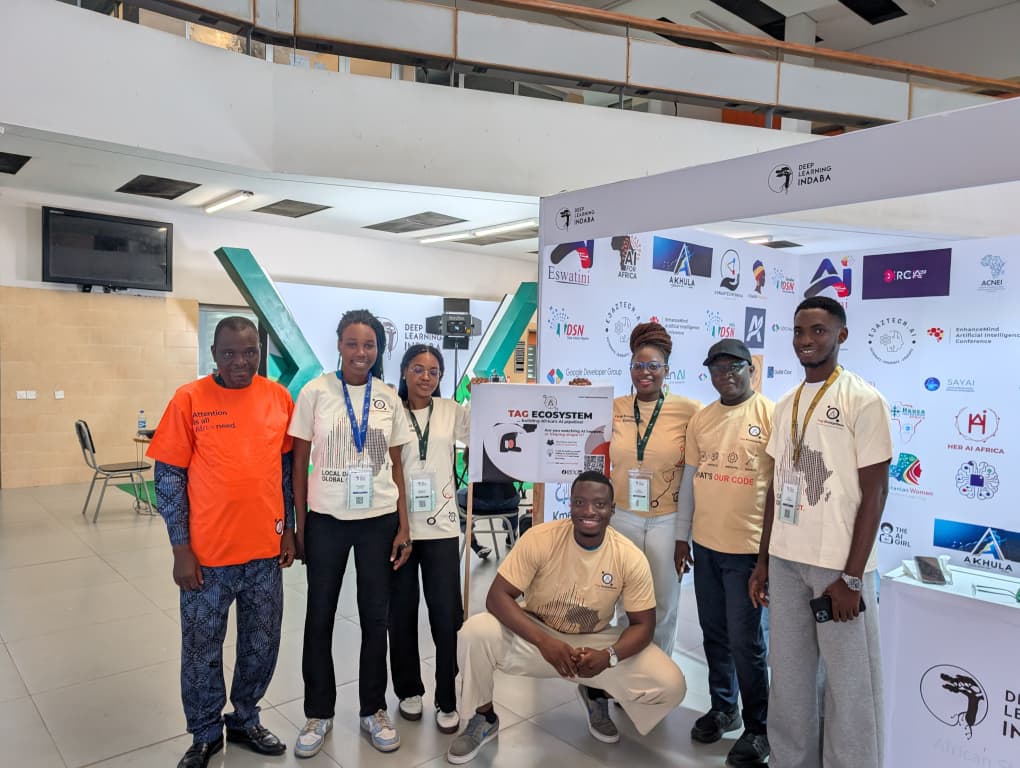
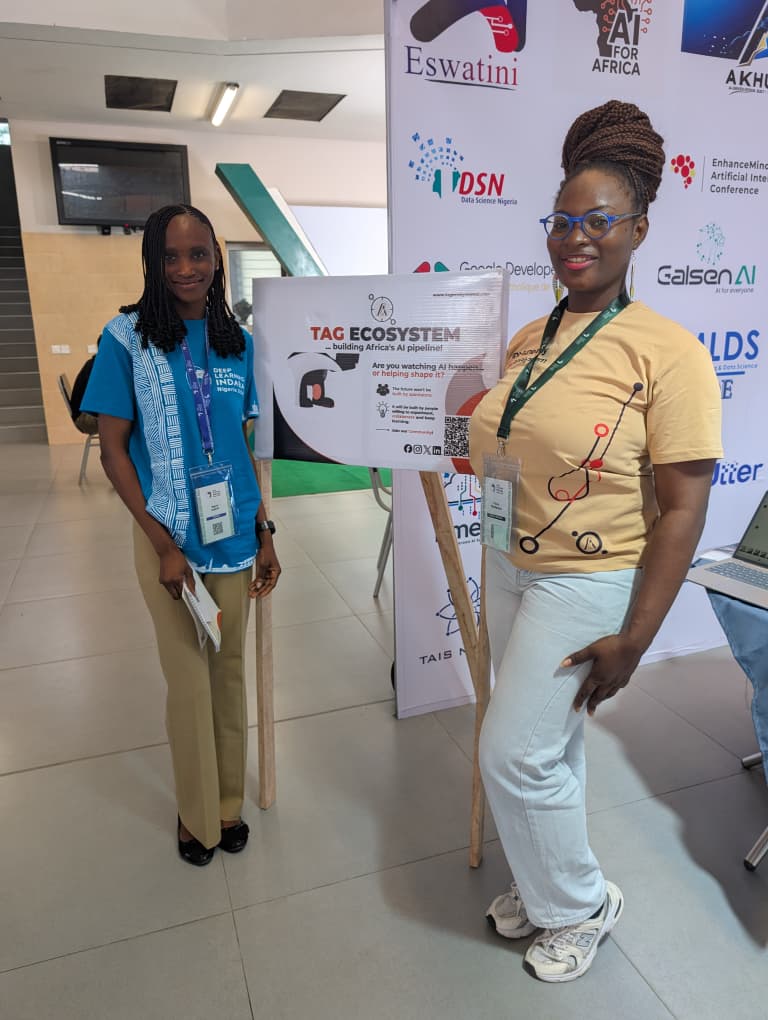
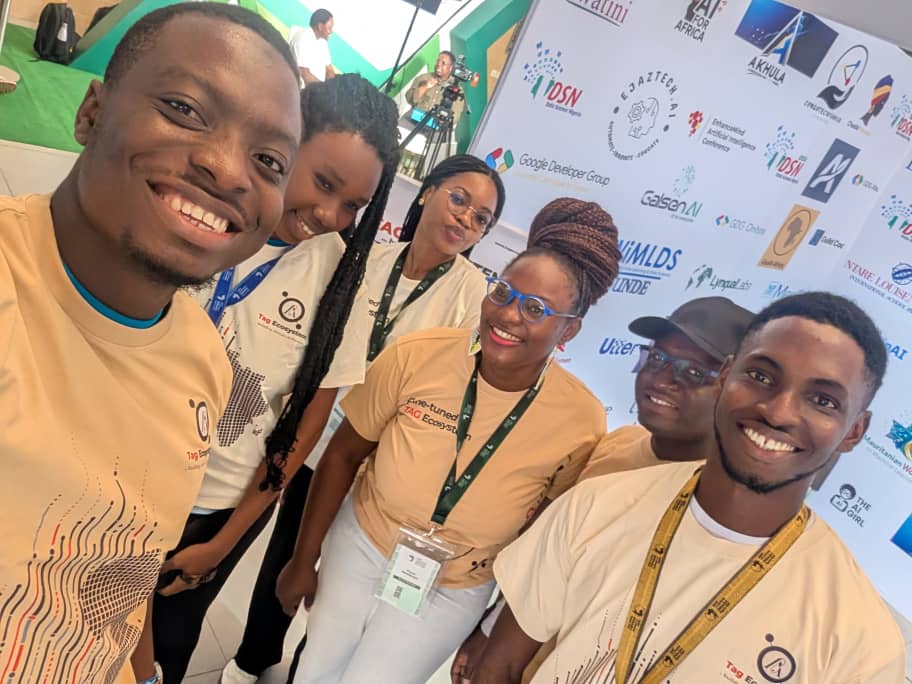
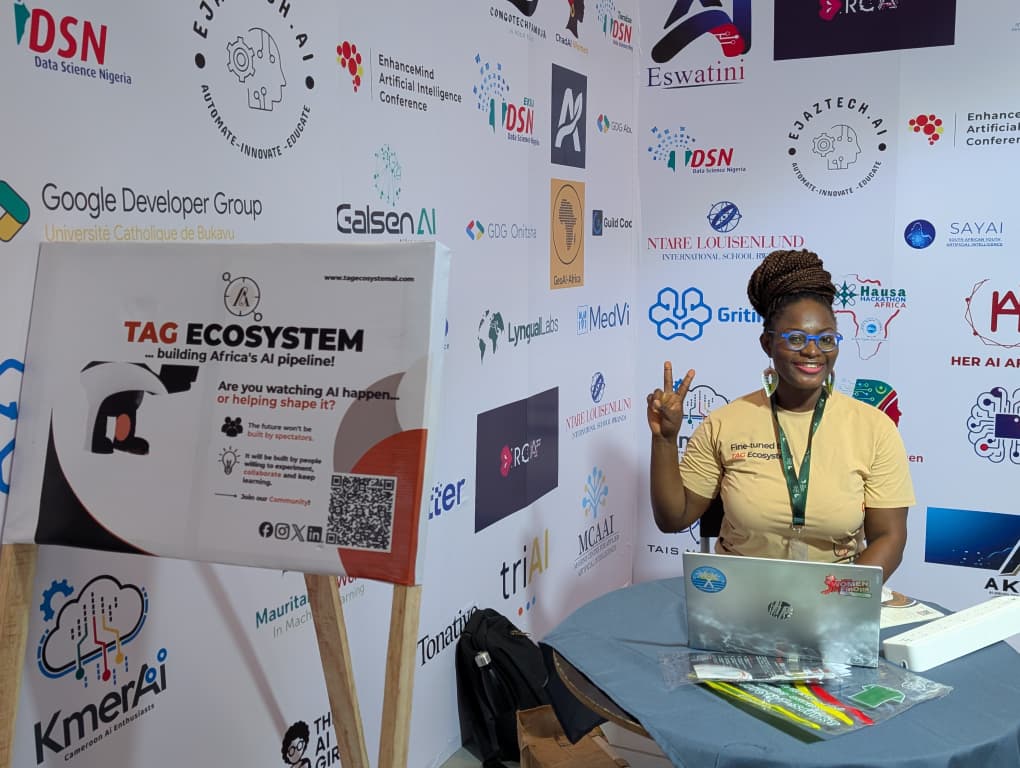
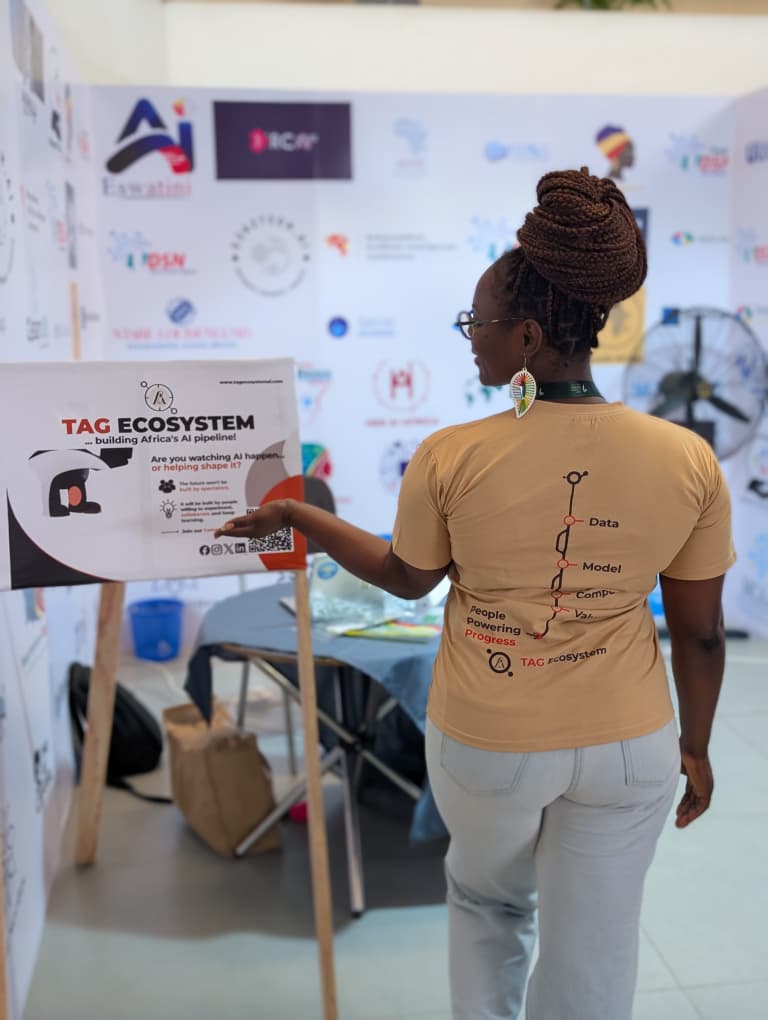
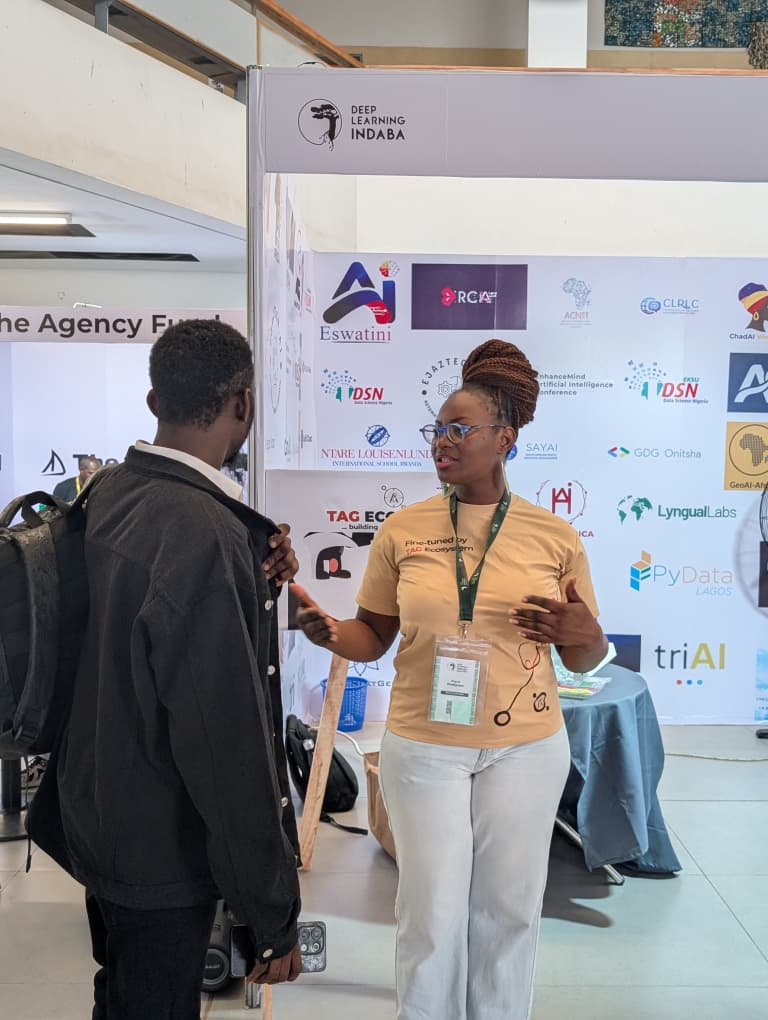
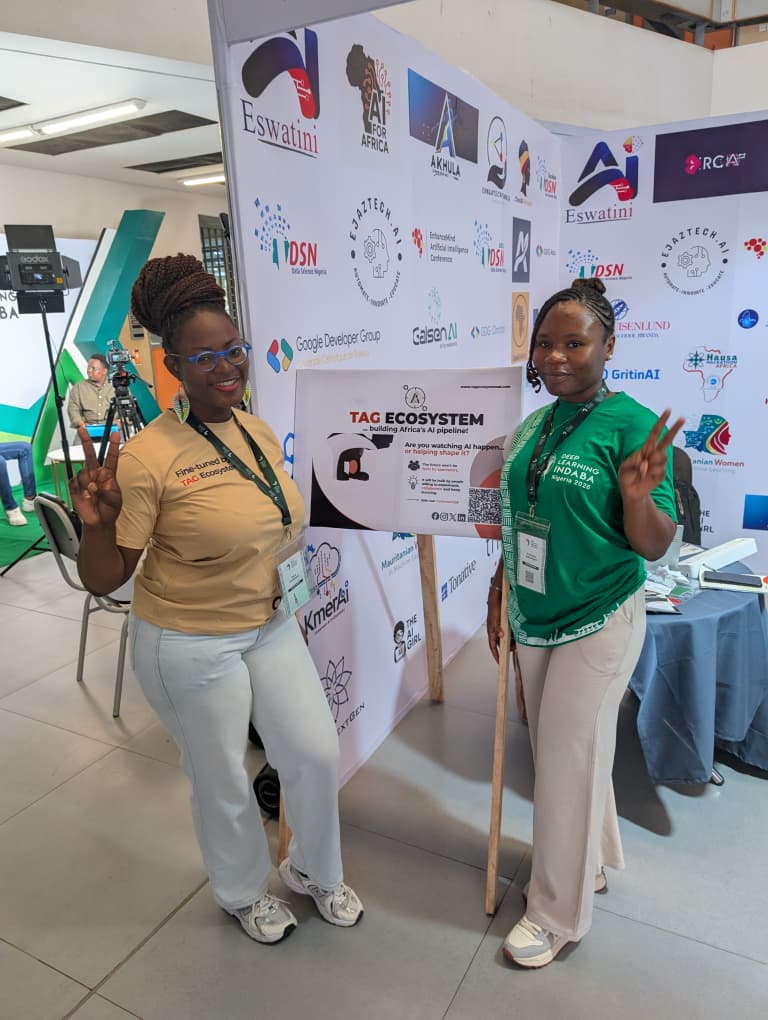

We showed up at Deep Learning Indaba Nigeria 2026 with merch and swag for the community, and spent the event doing something we don't get to do enough of online: meeting people face to face. Community members we'd only ever known from our virtual meetings and group chat became real people we could shake hands with, take pictures with, and talk shop with in person.
We also met new people who joined the community group chat on the spot. Conversations at the booth are already turning into ideas for projects to build together, and we're hoping this is the first of many meetups and more wins to come.
This website isn't just a page about the community, it ships some of it. TAG Ecosystem runs a live Model Context Protocol server: add it to Claude, Cursor, or any MCP client and your AI assistant can answer questions about our mission, curriculum, research wins, community, and how to join, straight from the source.
https://www.tagecosystemai.com/mcp
TAG Ecosystem Community is open to everyone: students, career switchers, developers, researchers, and creators. What makes us different is structure, accountability, and a culture of real progress.
Regular check-ins with mentors for members actively in the program. Direct guidance, not just async messages.
Collaborative sessions on ongoing AI projects designed to push real research output forward.
Structured curriculum reviews to track growth, adjust learning paths, and celebrate milestones.
Connect with a diverse community of AI learners and builders across Africa and the diaspora.
Applications are open. Fill the form to join the TAG Ecosystem Community and get access to the full ecosystem.

AI Engineering InternFlour Mills of Nigeria Plc
This is my first formal AI Engineering role. TAG Ecosystem played a significant role in helping me get here. Beyond the technical learning, the community gave me access to people, opportunities and referrals that I may not otherwise have had.
The TAG AI Engineering Bootcamp was valuable because it pushed me to approach AI as an engineer, not just as someone who can build models. Working on practical projects with a team helped me strengthen my technical thinking, collaboration and problem-solving.
I also want to acknowledge our mentor, Godsgift Braimah, whose impact on my team has been significant. She is deeply invested in our success and consistently brings that passion into her mentorship. Beyond the technical guidance, she continually exposed us to industry best practices, including the professional and soft skills needed to work effectively as an AI engineer. Her emphasis was not just on getting something to work, but on understanding how to build and communicate solutions in a way that reflects industry standards.
I am also very grateful to Flora for referring me for the opportunity and supporting me throughout the process.
For me, this role represents an important step in a career transition I have been working very hard towards. I am grateful to TAG Ecosystem for creating an environment where I could learn, build, connect with people in the industry and access an opportunity like this. I am excited about what comes next.

AI Engineering InternFlour Mills of Nigeria Plc
This is my first AI Engineering role. TAG Ecosystem referred me for the opportunity, and the Founder, Flora, was very helpful with negotiation tips, encouragement and insider information on how the recruitment process was going because I was very tense.
Overall, I wouldn't have gotten this role without the support of TAG Ecosystem. I am so grateful to be part of this community.

Founder & AI Educator
Flora is an AI Engineer and researcher passionate about making artificial intelligence accessible to Africans. Through TAG Ecosystem, she is building the infrastructure for Africa's next generation of AI talent, combining technical training with community support and career mentorship. Connect with her across all her social media platforms.
View PortfolioMeet the operators, researchers, and storytellers shaping our programmes, technical work, community, and public voice.

Community & Programme Operations

Content Strategy & Social Media Lead
TAG Ecosystem is an AI-focused learning and growth community designed to help people move from confusion in tech to becoming skilled, confident, and career-ready in AI. It combines AI education, community learning, hands-on projects, career guidance, peer mentorship, accountability systems, professional networking, and skill development. We are a structured community where members learn together, build together, practice together, and grow together.
TAG Ecosystem is for anyone who wants to build a future in tech and AI, including students looking to gain future-proof skills, beginners curious but confused about AI, working professionals transitioning into AI careers, and AI enthusiasts wanting a strong learning community. We welcome everyone regardless of background, gender, or prior experience. The focus is on transformation, growth, and access to quality AI education.
TAG Ecosystem helps people transform from confusion to confidence in AI, from beginners to skilled practitioners, from isolated learners to connected community members, and from passive consumers to hands-on builders. We help transition uncertain career seekers into career-ready professionals. The emotional transformation includes gaining confidence, clarity, direction, and a sense of belonging. The practical transformation includes real AI knowledge, hands-on experience, stronger portfolios, better career opportunities, technical confidence, and industry readiness.
TAG Ecosystem solves the problem of people wanting to enter tech and AI but not knowing where to start or how to grow consistently. Many people struggle because AI feels complicated, learning alone is difficult, there is too much scattered information online, they lack mentorship and guidance, and they don't have accountability. We solve this through simplified AI learning, structured curriculum, community-based learning, hands-on projects, weekly accountability sessions, peer mentorship, networking opportunities, and career guidance.
You can join the TAG Ecosystem by completing the application form in the Community section above after which you will be onboarded into the community.
Not at all. TAG Ecosystem is completely free to join! We believe that quality AI education and community should be accessible to everyone, regardless of financial background. Simply complete the application form, join the community and you get full access to our curriculum, mentorship, community sessions, and projects at no cost. Our mission is to open doors, not close them.
TAG Ecosystem actively seeks grants and partnerships to fund research, student innovation, community hackathons, and talent acceleration. Sponsors gain direct access and visibility to emerging AI talent across Africa.
We're a non-profit and rely on donations and grants to run. See the full picture, our traction, ComeSabi, and how to partner with us:
View Sponsorship OverviewTAG Ecosystem is building Africa's AI talent pipeline and we're opening up volunteer roles for people who want to help shape it.
Fill this form and we'll reach out about how your skills can plug into what we're building at TAG Ecosystem.
Whether you're a student, an engineer, a researcher, or a sponsor, there is a place for you inside TAG Ecosystem. The ecosystem is growing. Come build with us.
Join the Community
Connect with us on social media
TAG Ecosystem
@tag_ecosystem
@tag_ecosystem
TAG Ecosystem
@TAGEcosystem